
As a global No.1 brand by sales in dental metal 3D printing, FastForm3D’s growth is no coincidence.
With a presence in more than 80 countries and over 3,000 systems installed worldwide, FastForm3D has built its growth on more than metal 3D printing hardware. From AI-powered preprocessing and intelligent process control to a software-first architecture, the company has developed a digital dental manufacturing system designed for repeatability, scalability, and global deployment.
Behind FastForm3D’s global sales leadership is the long-term integration of technology, hardware, software, automation, and worldwide delivery capabilities.

01. Global Dental Manufacturing Still Faces Major Digitalization Challenges
Despite continued growth in demand for dental restorations, digital adoption across the global dental manufacturing industry remains at an early stage.
Global digital dentistry penetration remains below 30%, while in emerging markets such as Southeast Asia and Latin America, the rate is even lower, at less than 10%. Many dental laboratories still rely heavily on traditional manual manufacturing processes.
Conventional dental restoration production involves multiple complex procedures, long production cycles, and significant dependence on experienced technicians. As global dental demand continues to rise, the gap between growing production requirements and limited scalable manufacturing capacity is becoming increasingly apparent.
Against this background, digital manufacturing systems that can lower technical barriers, improve production efficiency, and deliver consistent results at scale are becoming increasingly important.
FastForm3D’s global growth reflects this shift in the dental manufacturing industry.
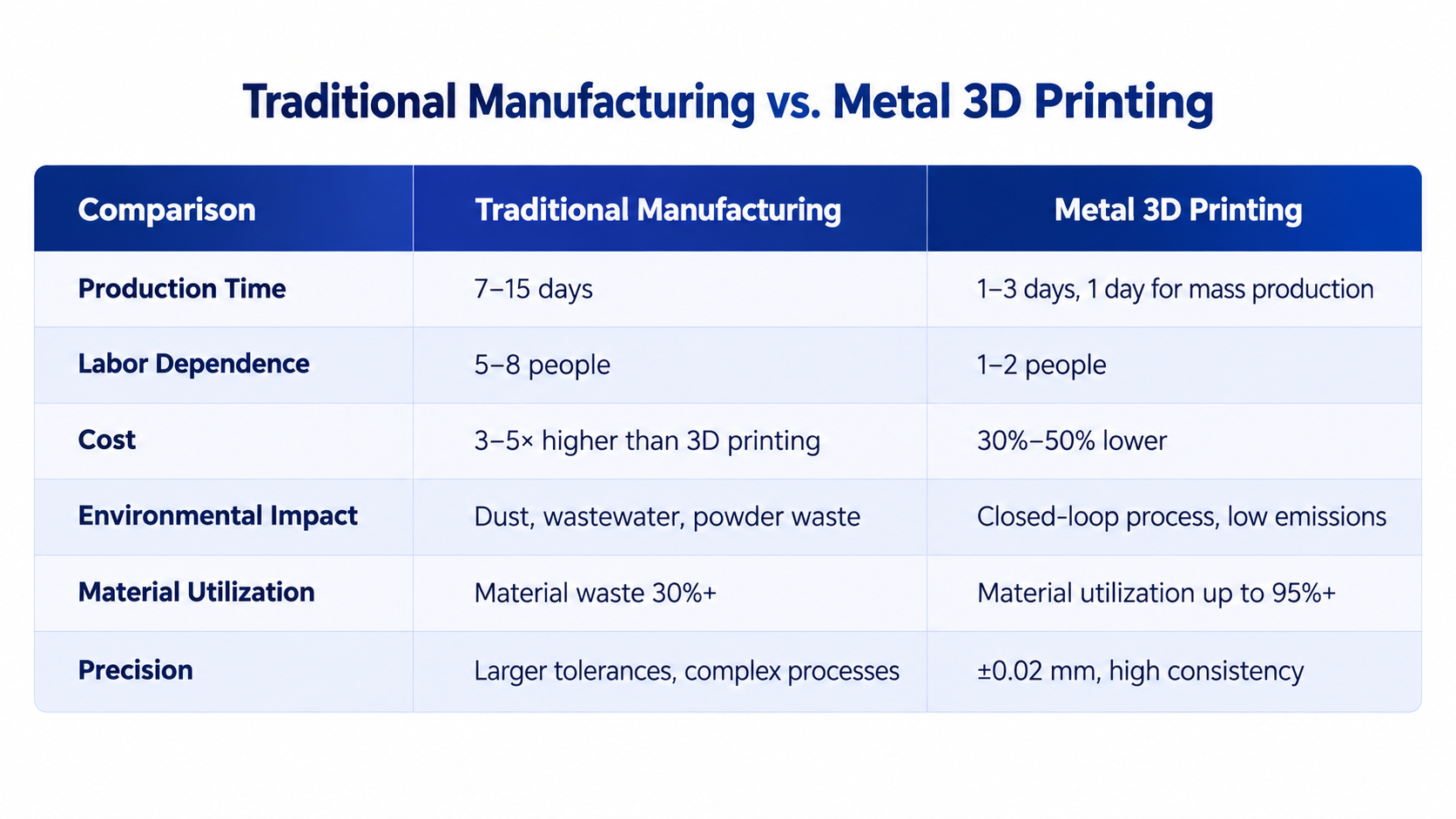
02. From More Than 12 Processes to a Three-Step Digital Workflow
Traditional dental restoration manufacturing can involve more than 12 procedures, including impression taking, model preparation, wax-up, casting, grinding, fitting, and finishing.
FastForm3D uses metal 3D printing technology to simplify the workflow into three core steps:
Design → Print → Post-Processing
This is more than a reduction in the number of production steps. It represents a fundamental change in how dental manufacturing is organized.
Traditional production depends heavily on individual technician experience. A digital workflow, by contrast, transforms complex manufacturing knowledge into standardized processes.
Instead of relying on different production methods from one laboratory to another, hardware, software, and process parameters can work together within a repeatable manufacturing system.
This standardized workflow is one of the key factors enabling FastForm3D to support customers across more than 80 countries while maintaining consistent production capabilities.
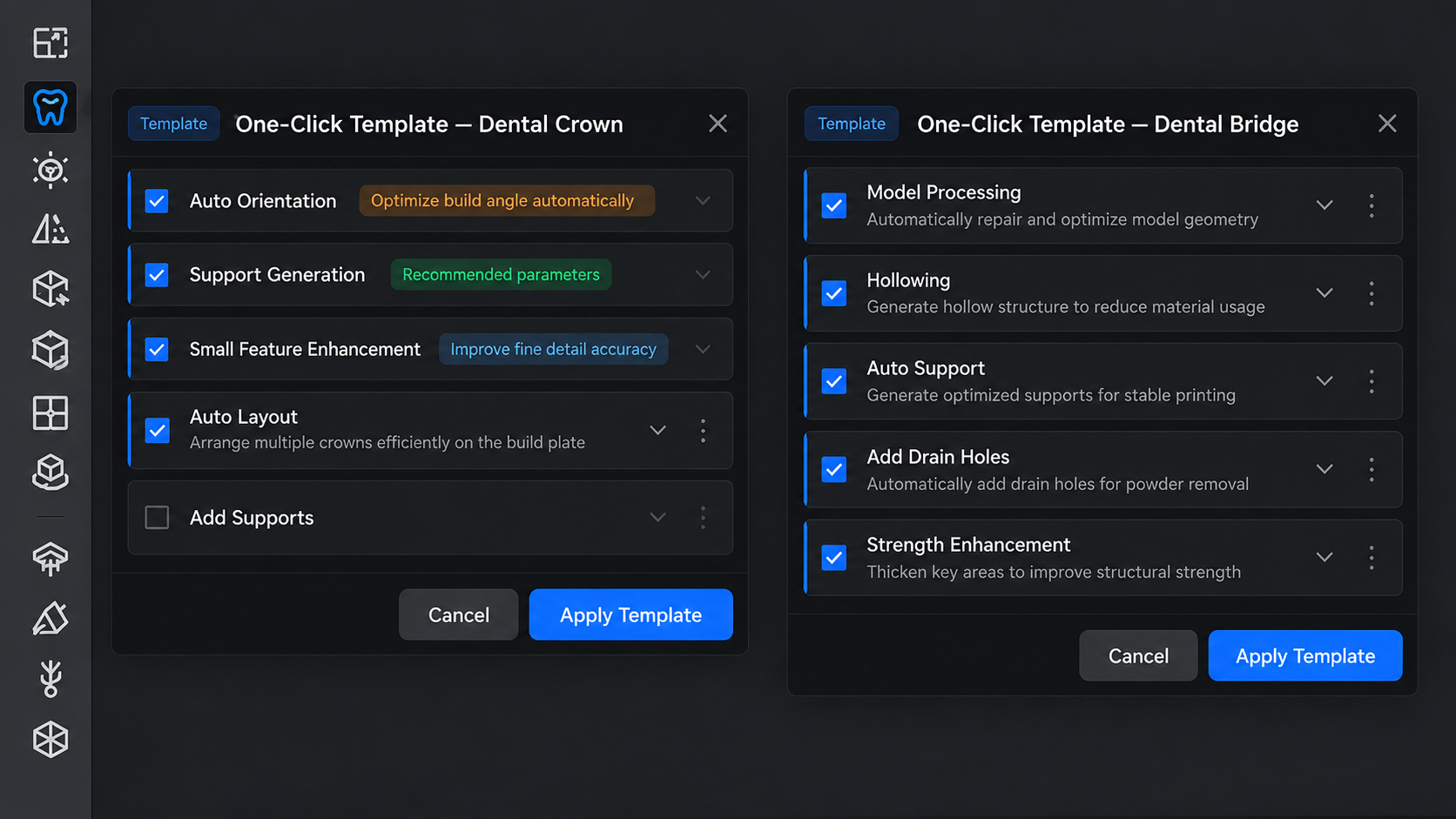
03. AI Lowers the Barrier to Dental Metal 3D Printing
For many dental laboratories, purchasing a metal 3D printer is only the beginning.
Preprocessing, support generation, parameter configuration, model preparation, and toolpath planning can all require specialist knowledge. These software-related processes often represent one of the biggest barriers for laboratories adopting metal additive manufacturing.
FastForm3D applies artificial intelligence to simplify these processes.
Its AI support generation system is trained on tens of thousands of real dental models. The system can automatically identify structurally weak areas and generate optimized support structures, helping automate preprocessing tasks that previously required repeated manual adjustment by experienced technicians.
By reducing software complexity and operator dependence, AI makes metal 3D printing more accessible to small and medium-sized dental laboratories.
Lower technical barriers allow more laboratories to adopt digital production, expanding the addressable market for dental metal additive manufacturing and supporting the continued growth of FastForm3D’s global installed base.
04. Intelligent Process Control Supports Consistent Global Production
Global sales leadership requires more than selling a large number of machines. Equipment must also operate reliably across different countries, production environments, and levels of operator experience.
FastForm3D’s AI powder-spreading inspection system is powered by 60 TFLOPS of computing performance. Using mask-based slice recognition, the system can intelligently optimize the printing area and adjust process parameters within 0.3 seconds.
Combined with closed-loop feedback, the system supports full-process quality data traceability while reducing false alarm rates to one in a million.
These technologies are designed around one fundamental question:
How can every system deliver stable, consistent, and controllable production performance across different global markets?
Consistency enables replication, and replication enables scale.
This ability to maintain standardized manufacturing performance across multiple locations is a key part of FastForm3D’s transition from individual equipment sales to a globally distributed digital production network.
05. OpenClaw AI Turns Metal 3D Printers into Intelligent Production Systems
Traditional manufacturing equipment primarily functions as a tool operated by skilled personnel.
FastForm3D is moving toward a different model: intelligent equipment capable of supporting increasingly autonomous production workflows.
The OpenClaw AI Assistant automates key stages of the metal 3D printing process. Through natural-language instructions, users can initiate model inspection, model repair, slicing, toolpath planning, production task execution, and MES integration.
This changes the role of the machine.
Instead of functioning only as standalone hardware waiting for manual commands, the system becomes part of an AI-driven digital production workflow.
For global dental markets, this is particularly important. Simplified operation can reduce training requirements and make digital manufacturing more accessible to emerging markets, small and medium-sized laboratories, and users with limited additive manufacturing experience.
As AI further reduces operational complexity, the potential market for digital dental manufacturing continues to expand.
06. A Software-First Architecture Creates Unified Global Standards
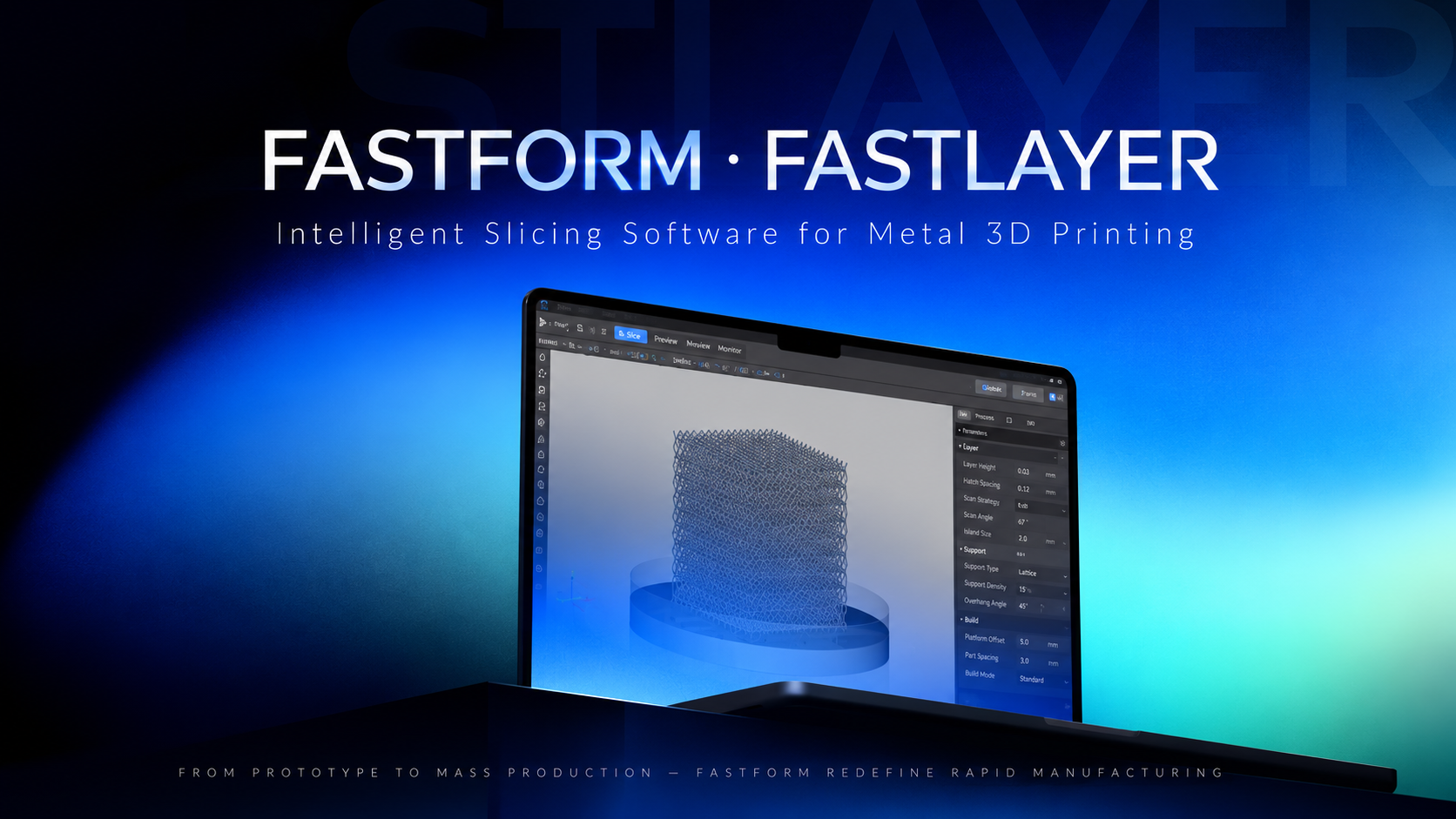
Unlike the traditional hardware-first approach adopted by many equipment manufacturers, FastForm3D follows a software-first development strategy.
The company first builds the underlying software architecture and then develops hardware around the same system, allowing software, hardware, and process control to be optimized together.
This model provides several advantages:
- Continuous free software upgrades help reduce long-term operating costs.
- In-house software development enables faster technical response and service support.
- Software and hardware developed within the same ecosystem improve overall system consistency.
More importantly, software provides the foundation for standardization.
For a global dental 3D printing company, the challenge is not simply delivering equipment to more countries. The greater challenge is ensuring that customers in different markets can achieve consistent operating experiences, process standards, and production results.
By building a unified software platform, FastForm3D creates a common technical foundation for scalable global deployment.
07. A Complete Dental Metal 3D Printer Portfolio for Different Production Needs
Dental laboratories vary significantly in size, digital maturity, production volume, and investment requirements.
A single machine cannot meet the needs of every market.
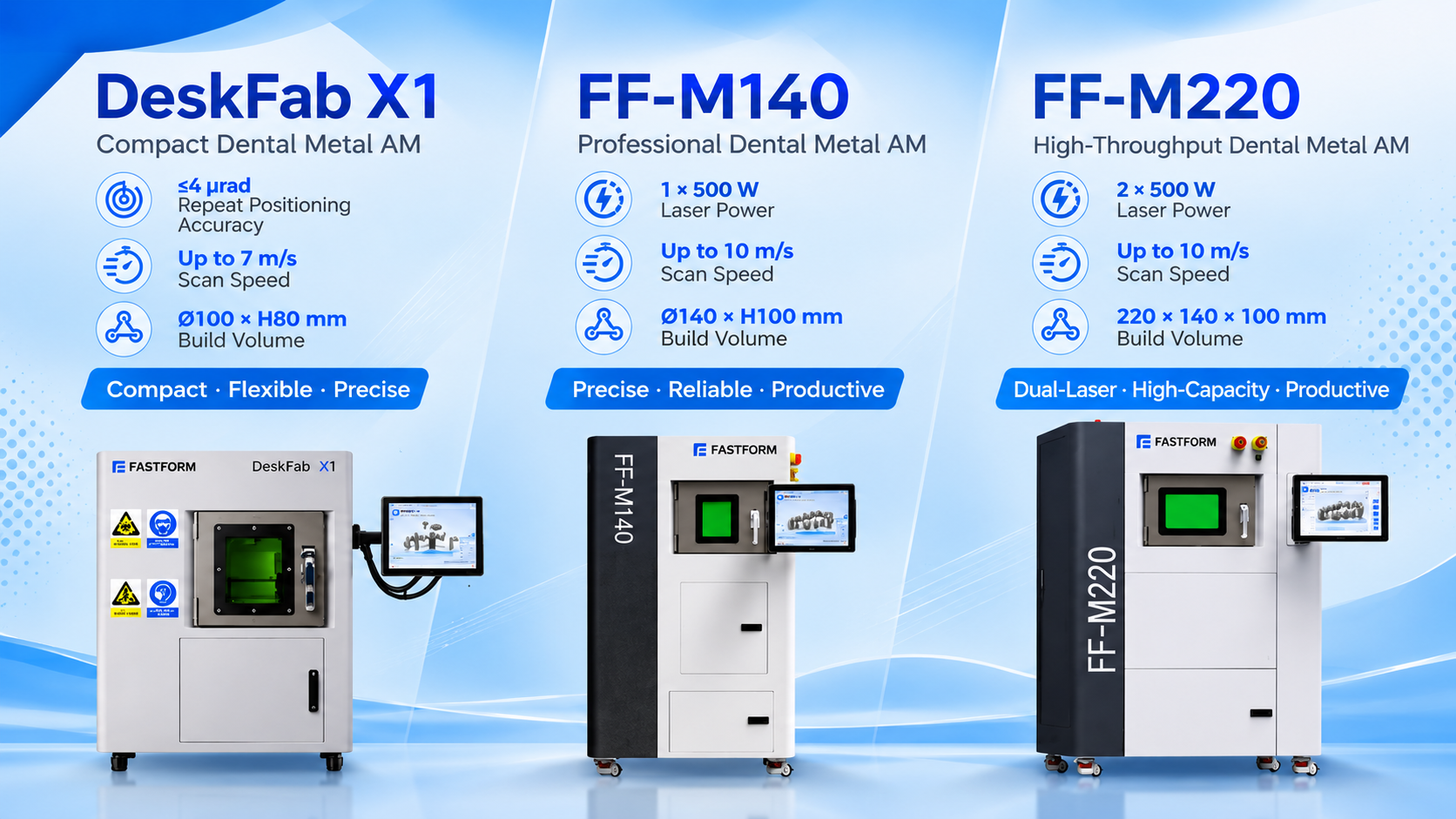
FastForm3D has therefore developed a dental metal 3D printing portfolio covering different stages of digital production:
DeskFab X1
Designed for entry-level digital transformation, DeskFab X1 provides smaller dental laboratories with an accessible starting point for metal 3D printing.
FF-M140
Built for stable batch production, FF-M140 is designed for laboratories seeking a balance between production efficiency, reliability, and operating cost.
FF-M220
Designed for industrial-scale production, FF-M220 provides higher manufacturing capacity for large dental laboratories, centralized production centers, and dental super factories.
From first-time digital adoption to batch production and industrial-scale manufacturing, FastForm3D’s product portfolio supports customers across different stages of growth.
This broad product coverage is another important factor behind the company’s global sales performance.
08. 80+ Countries and 3,000+ Systems Are Building a Global Digital Dental Manufacturing Network
FastForm3D systems are now deployed in more than 80 countries, with over 3,000 units installed across Europe, North America, Asia-Pacific, Latin America, and other global markets.
These numbers represent more than geographic expansion.
Together, they form the foundation of an increasingly connected global digital dental manufacturing network.
Across this network, metal 3D printing systems, software platforms, AI-powered workflows, and standardized process parameters work together to help dental laboratories transition toward more consistent and scalable digital production.
The future of dental manufacturing is moving from partial digitalization toward end-to-end standardization, from equipment-driven production toward system-driven manufacturing, and from experience-dependent workflows toward AI-enabled production.
Building on its global sales leadership, FastForm3D will continue advancing AI, software, automation, and metal additive manufacturing technologies to help make digital dental production more scalable, repeatable, and accessible worldwide.