
For years, one of the biggest challenges in metal 3D printing has been its reliance on process expertise.
Changing a material, part geometry, process parameter, or production condition often requires experienced engineers to repeatedly adjust printing parameters. This makes metal additive manufacturing difficult to standardize and creates a major barrier to truly intelligent, scalable production.
FastForm is introducing a new approach.
Powered by its proprietary AM Build AI process model, FastForm enables adaptive process control throughout the metal 3D printing workflow. In selected applications, the technology has reduced support-related powder consumption by approximately 98%, while also lowering material waste, shortening post-processing time, improving part quality, and reducing reliance on manual parameter tuning.
The result is a shift from experience-driven metal additive manufacturing toward AI-powered adaptive manufacturing.
01. Lower Material Consumption and Less Post-Processing
(a) Support Powder Consumption Reduced by 97.4%
Take a blade component as an example. Using a conventional metal 3D printing process, producing one blade requires approximately 187.6 g of powder, of which 14.4 g is consumed by support structures. Support material therefore accounts for around 7.7% of total powder consumption.
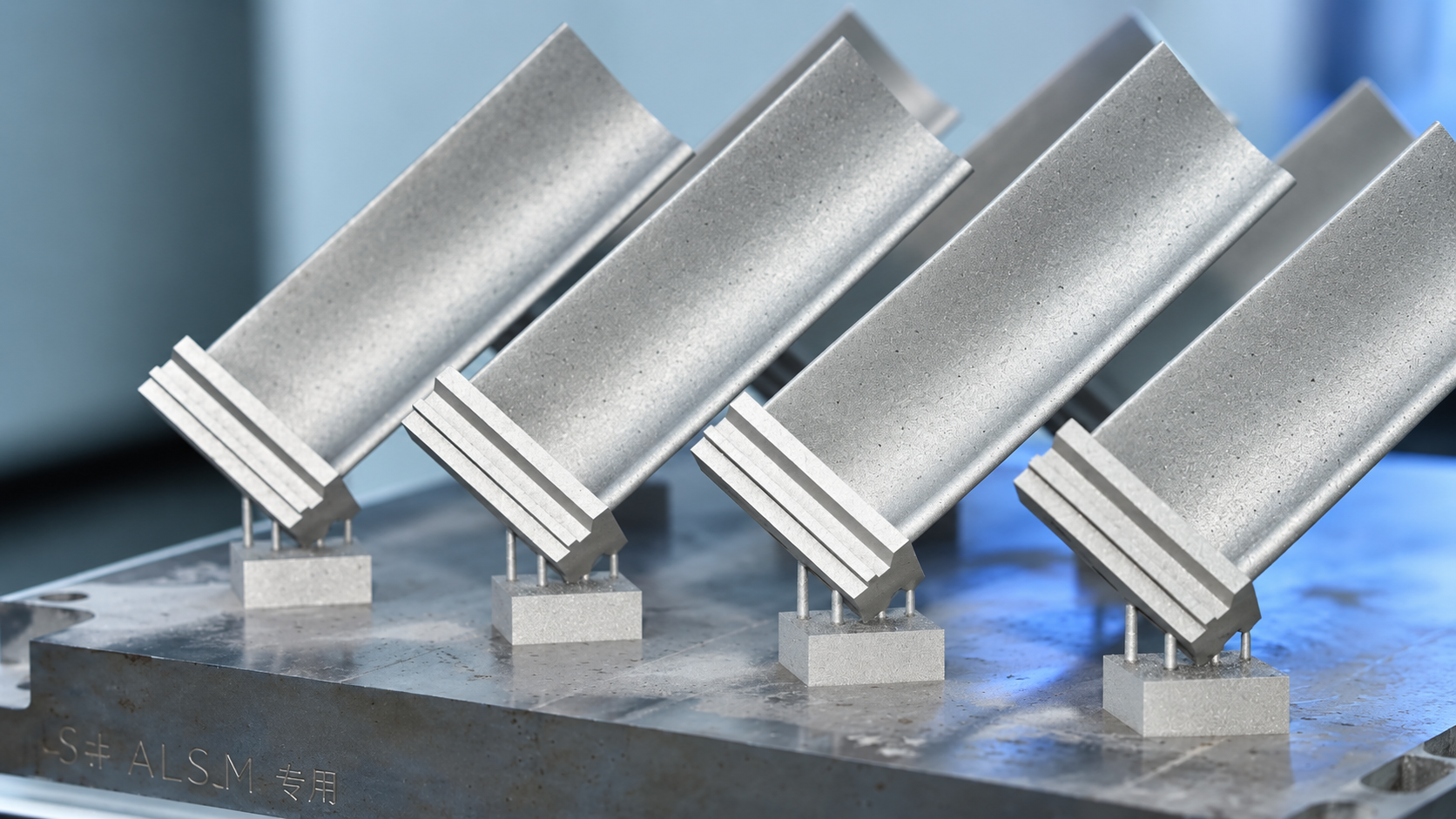
With the AM Build AI process model, support-related powder consumption is reduced to only 0.5 g, accounting for approximately 0.2% of total powder use.
This represents a 97.4% reduction in the share of powder consumed by supports.
For manufacturers operating at scale, reducing support material can translate directly into lower material costs, less waste, and more efficient metal additive manufacturing.
(b) Significantly Shorter Post-Processing Time
Traditional support-intensive printing typically requires several post-processing steps, including part removal, manual support removal, grinding, and sandblasting.
For the blade component above, conventional processing requires more than 20 minutes of post-processing.
With AM Build, cutting time can be reduced by more than half, supports are significantly easier to remove, and grinding time can be reduced by more than 30%.
For parts designed for near-support-free metal 3D printing, the difference can be even greater.
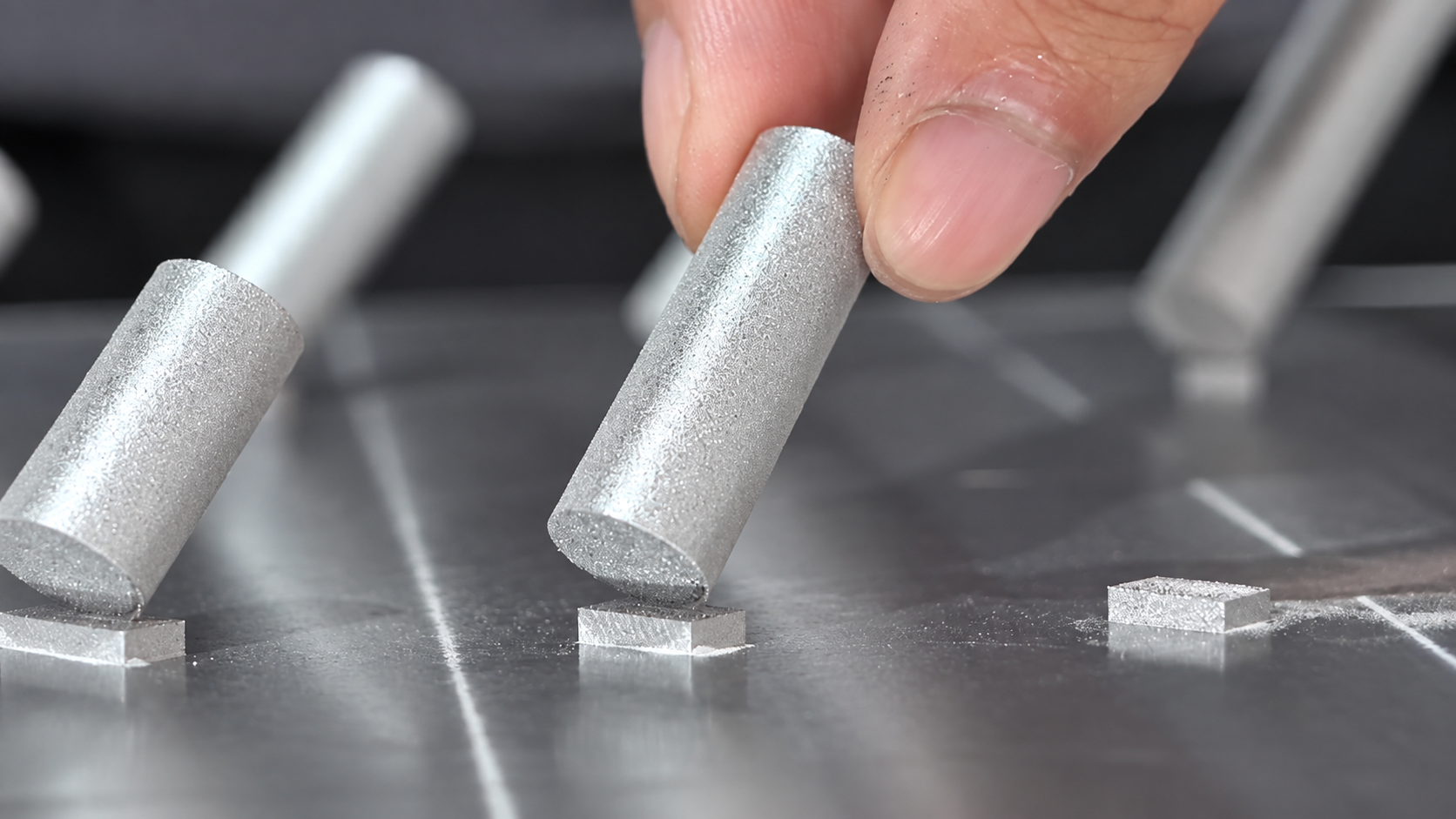
In some applications, components can be removed from the build plate with minimal effort, while support contact surfaces require little or no additional finishing. This can reduce both post-processing time and the number of downstream operations required.
(c) Improved Surface Quality and Consistency
AM Build also improves consistency across the printed surface.
Compared with conventional fixed-parameter printing, AI-adaptive processing produces a more uniform and refined surface finish, helping manufacturers improve repeatability across parts and production batches.
02. Better Results for Complex Metal Parts
The advantages of AM Build become even more apparent when printing components with complex geometries.
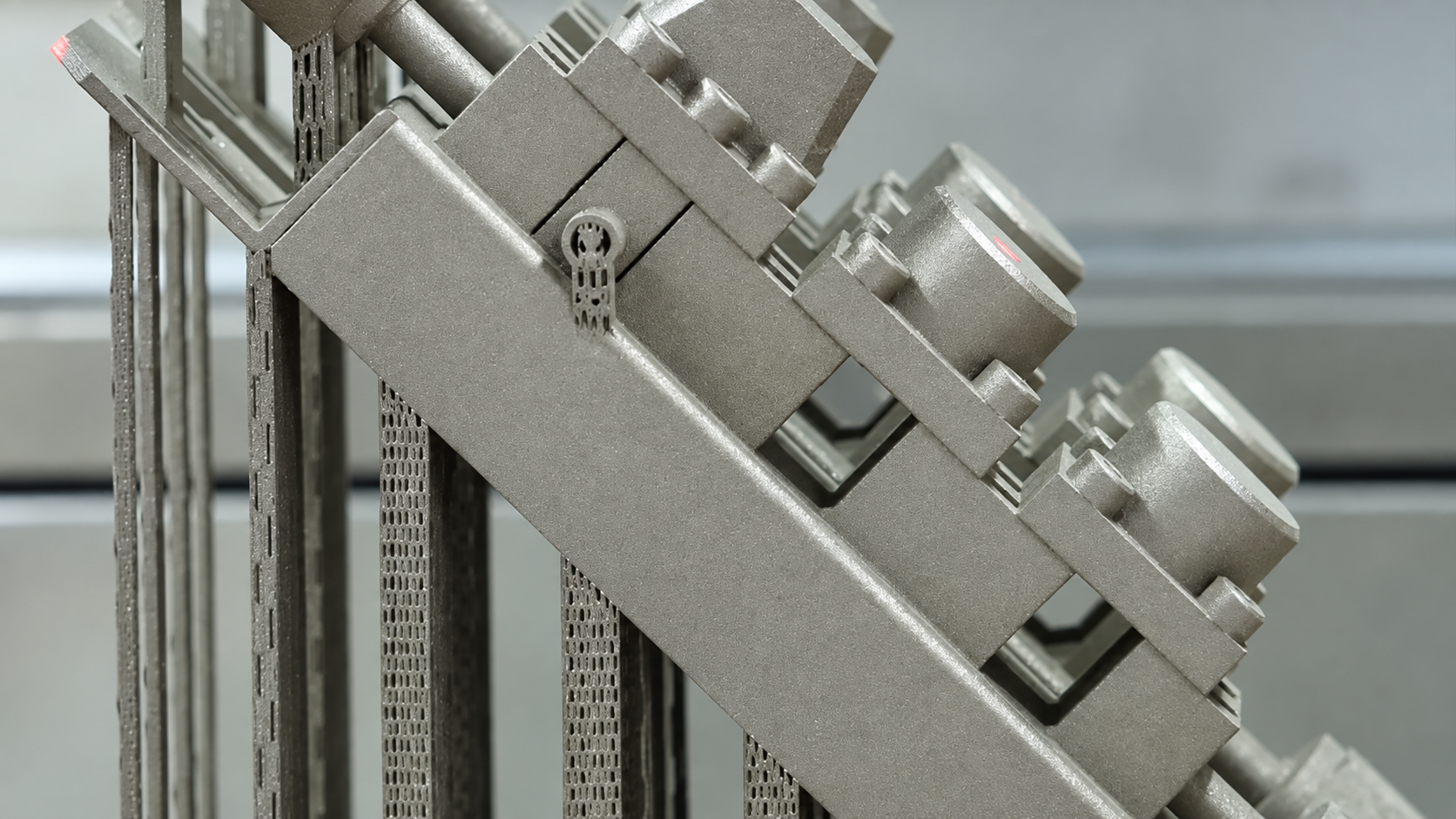
Conventional metal 3D printing often requires dense support structures around challenging features. These supports increase material consumption and can make support removal, local finishing, and surface treatment more difficult.
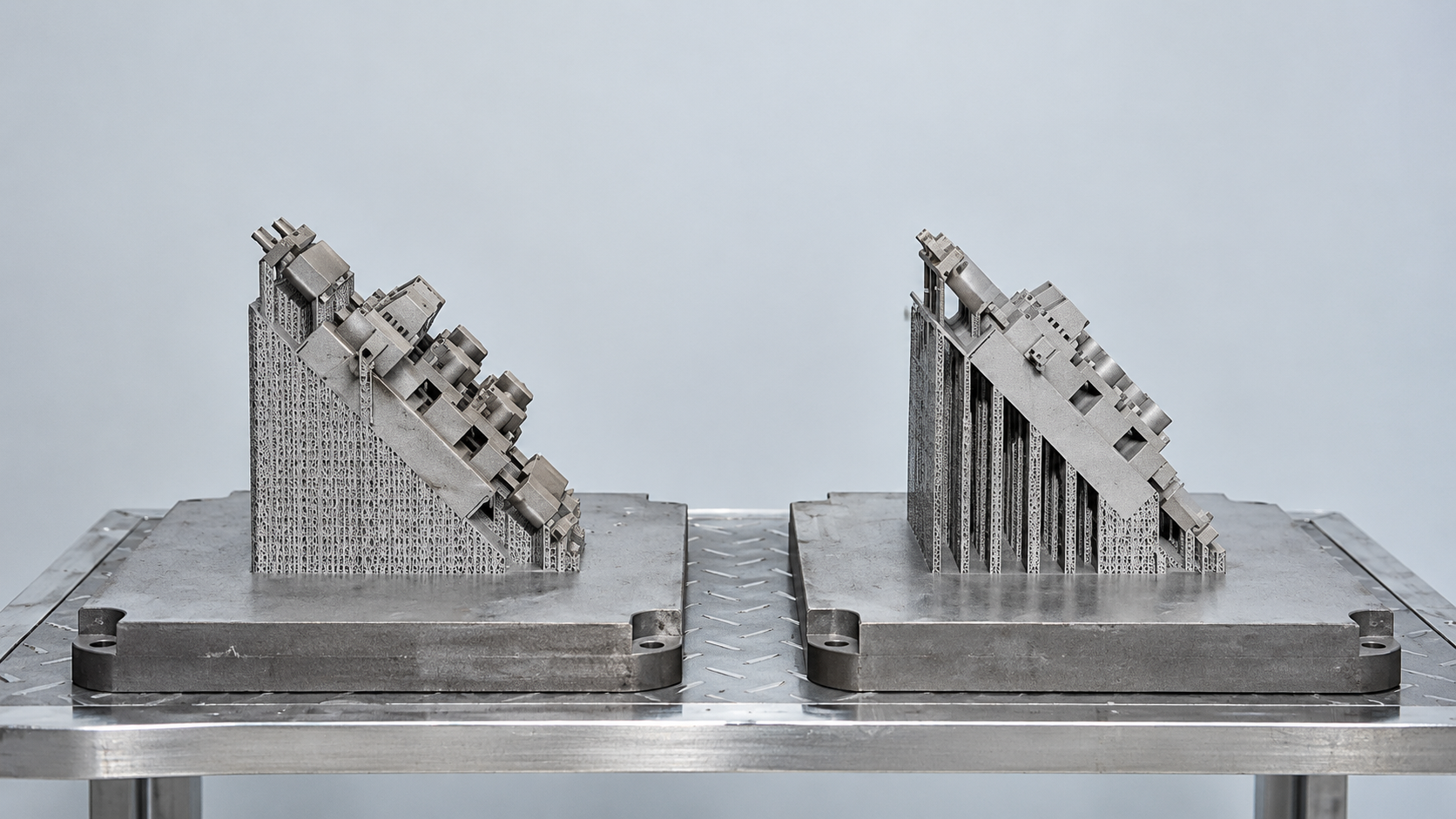
With AM Build AI, support structures can be significantly simplified. For one complex component evaluated by FastForm, the results showed a 66% reduction in support volume and a 50% reduction in material waste. Post-processing time was also substantially reduced.
Using a conventional process, sawing, support removal, surface leveling, and fine grinding required a total of 31 minutes and 46 seconds. With AM Build, the same post-processing workflow required only 16 minutes and 18 seconds. At the same time, reduced support contact and optimized printing conditions contributed to improved surface quality and easier finishing.
This makes AM Build especially valuable for complex industrial components where conventional support strategies can significantly increase both manufacturing cost and labor requirements.
03. Adaptive AI Process Control Replaces Fixed Parameters
Traditional metal 3D printing commonly relies on predefined, fixed process parameters.
However, actual printing conditions are constantly changing. Material behavior, thermal accumulation, heat dissipation, geometry, and local build conditions can vary from layer to layer. Fixed parameters cannot always compensate for these changes, which may result in oxidation, edge defects, rough surfaces, unstable quality, or inconsistent batch production. In conventional workflows, experienced engineers often compensate for these variations manually.
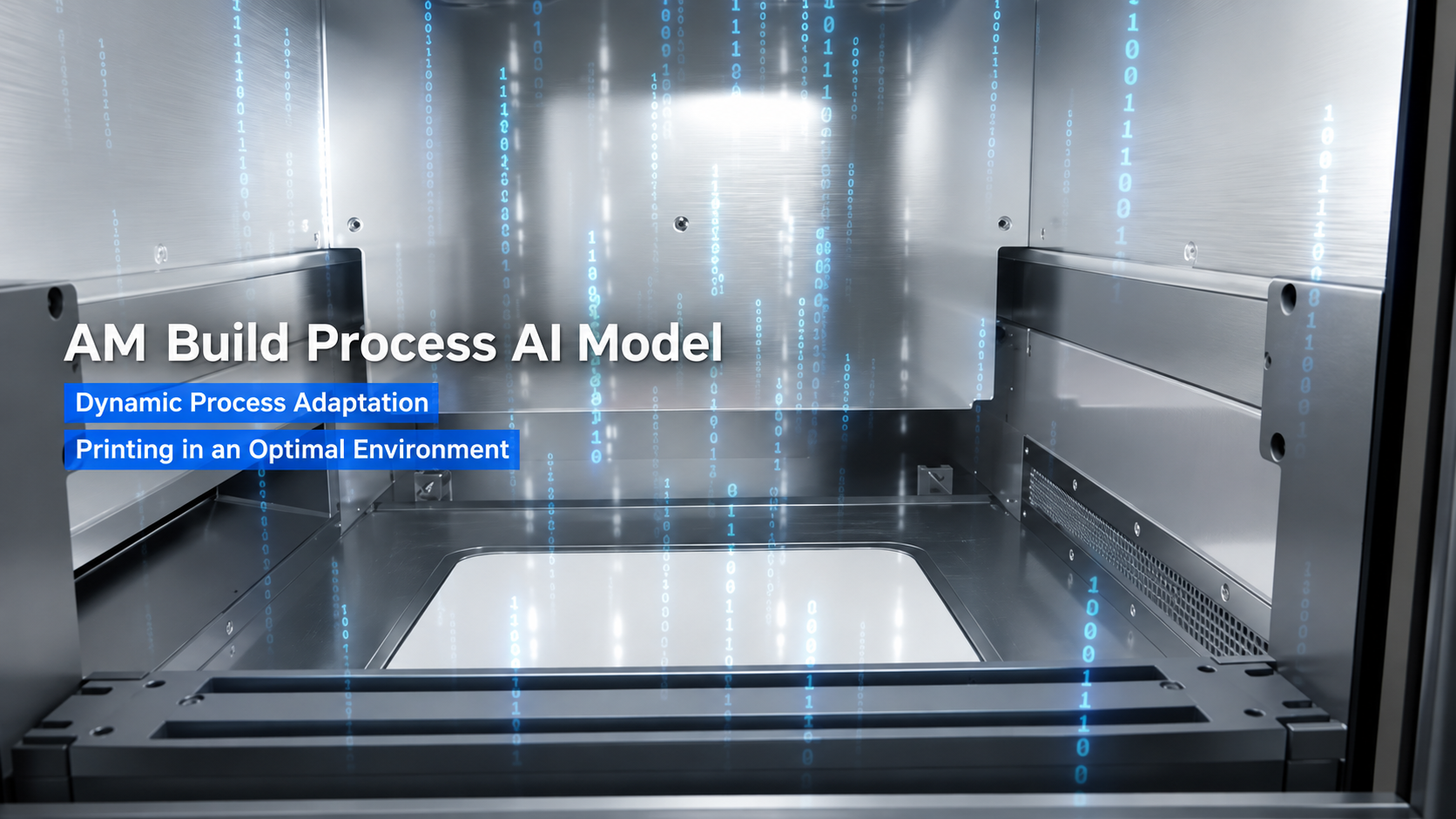
AM Build changes this approach. The AI process model combines real-time process sensing with adaptive algorithms to identify changes in material state and thermal conditions during printing. Instead of applying one fixed parameter set throughout the entire build, the system can dynamically optimize printing parameters on a layer-by-layer basis. This enables continuous adaptive control throughout the build process, reducing the need for repeated manual parameter adjustment and supporting more consistent first-time-right production. For industrial users, this represents an important step toward more standardized, automated, and intelligent metal additive manufacturing.
04. Integrated Powder Handling for Industrial Metal 3D Printing
FastForm is also extending automation beyond the printing process itself.
For small- and medium-scale production environments, FastForm has developed a new-generation industrial metal 3D printer with an integrated powder sieving and delivery system.
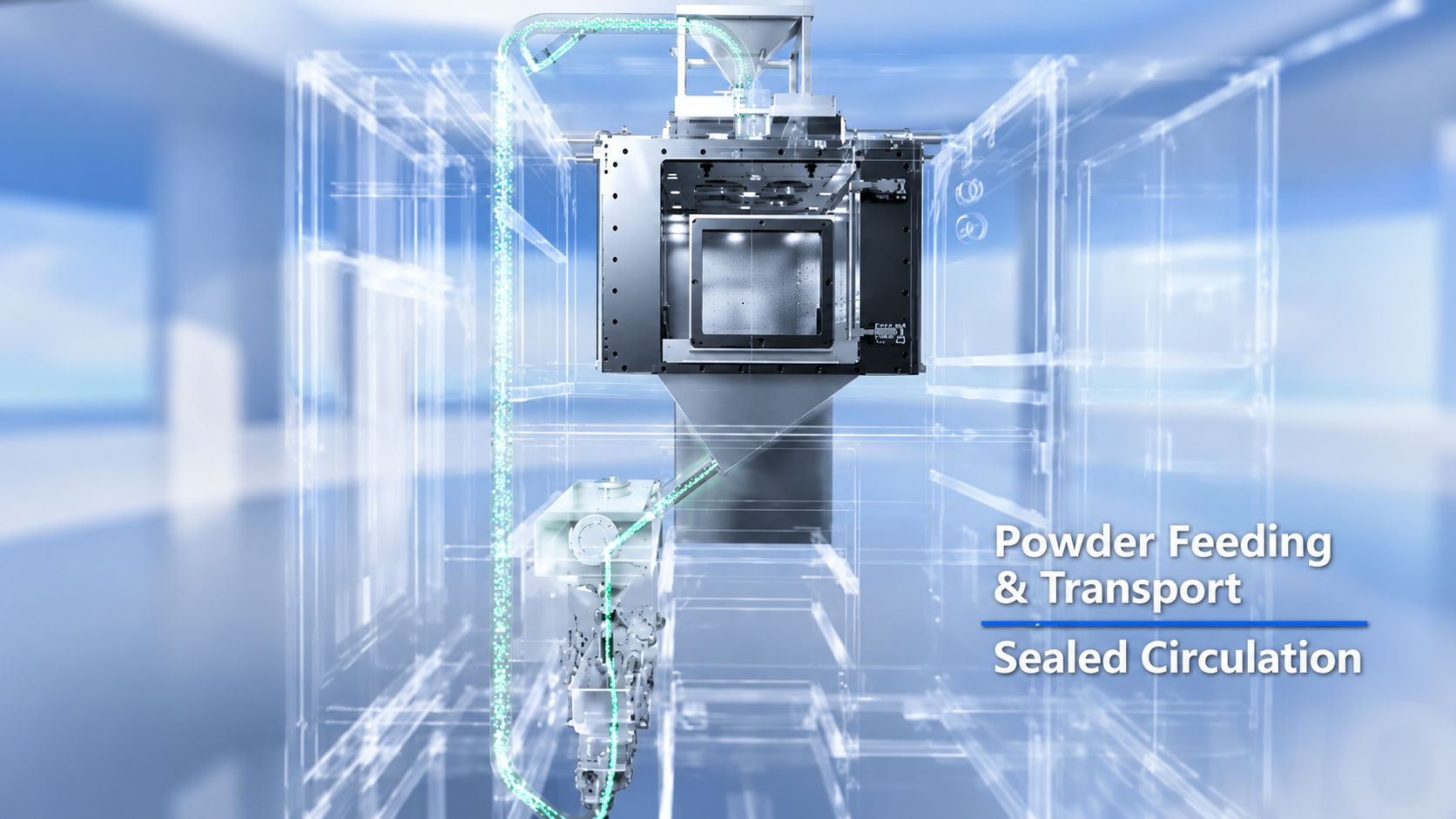
The system integrates powder sieving, powder feeding, and powder transfer into a more automated workflow. Operators only need to load the required powder before production begins. The machine can then manage powder circulation during operation without requiring frequent manual interruption for intermediate powder handling. By reducing manual intervention, the integrated system helps improve production continuity while lowering the risk of process variation caused by human operation. For manufacturers moving from prototyping toward batch production, this higher level of automation can help improve both productivity and process consistency.
05. Integrated Smart Production Lines for Large-Scale Manufacturing
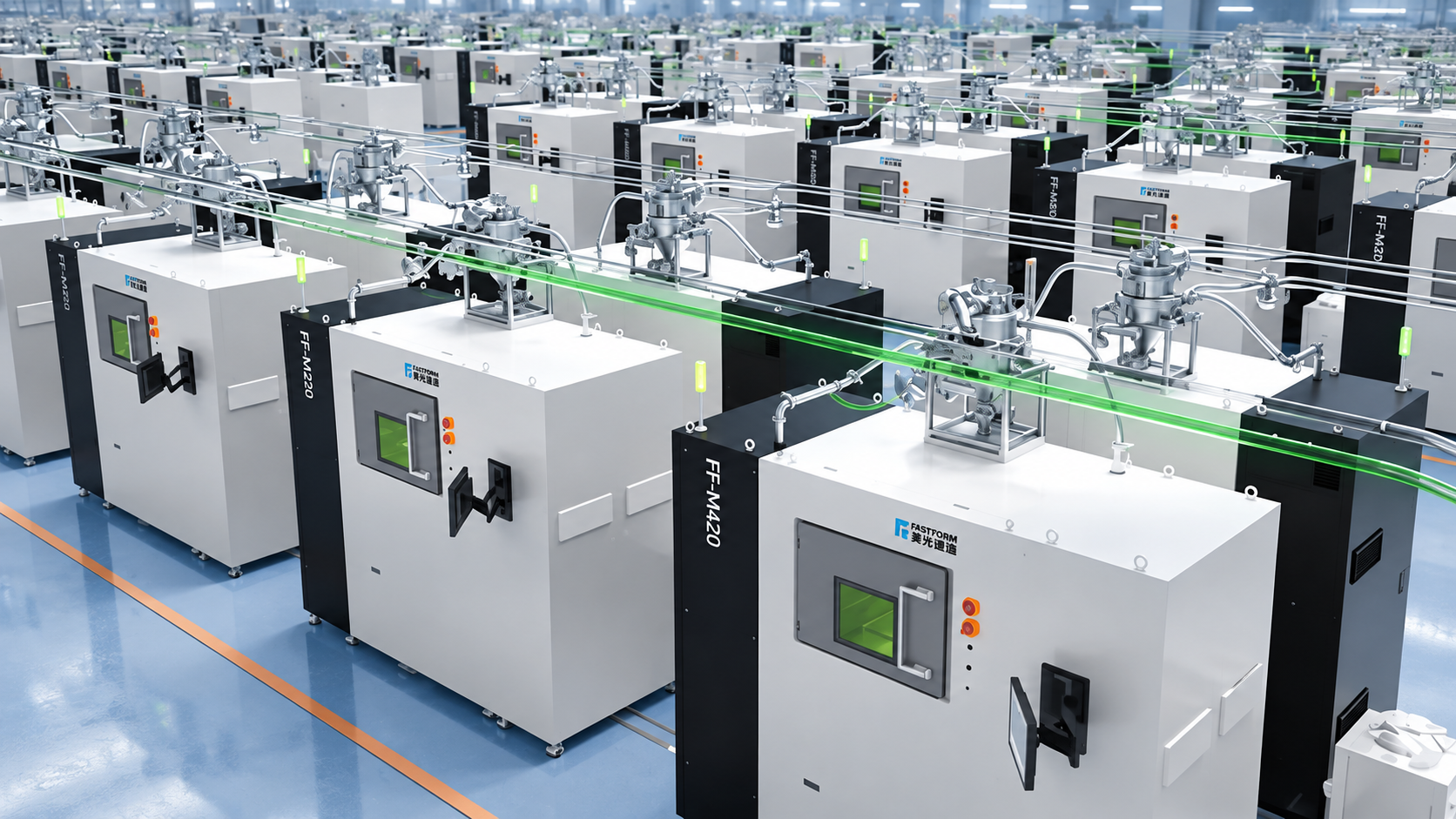
For larger production environments, FastForm has also developed a lightweight intelligent metal additive manufacturing production line equipped with a centralized powder management system.
The system integrates two key functions: automatic powder supply and automatic overflow powder recovery. Throughout the process, powder remains within a closed-loop system. A vacuum powder collection unit transfers material through negative-pressure conveying. The powder then passes through a precision sieving unit that removes contaminants and oversized particles before qualified powder is automatically transferred into a storage unit for reuse. The entire powder circulation process is designed to remain enclosed, minimizing exposure to the external environment and reducing powder leakage and operator contact. This closed-loop approach helps maintain more consistent powder conditions, supports powder reuse, reduces contamination risks, and improves batch-to-batch production stability.
By moving beyond standalone metal 3D printers toward integrated equipment, powder management, AI process control, and production automation, FastForm is expanding the possibilities of large-scale metal additive manufacturing.
06. From Experience-Driven Printing to AI-Powered Manufacturing
The value of AI in metal 3D printing is not simply about automating individual parameters. Its greater potential lies in making the entire manufacturing process more adaptive, repeatable, and scalable. Through AM Build AI, reduced support structures, automated powder handling, and integrated production systems, FastForm is working toward a metal additive manufacturing model with less support material, less manual intervention, shorter post-processing, more consistent quality, and greater production scalability. The transition from fixed parameters to adaptive process control marks an important evolution in industrial metal 3D printing—and a further step toward truly intelligent additive manufacturing.